

You plunge the sink. It drains. Three days later, you're standing over the same sink wondering what you did wrong. Nothing, probably. You just treated the symptom instead of the cause, which is the most common mistake in drain maintenance, and also the easiest one to fix once you understand what's actually happening inside the pipe.
Why Clogs Build Instead of Just Happening
Every sink, tub, and floor drain in your home relies on a P-trap, the curved section of pipe just below the drain opening. Its job is to hold a small amount of standing water that blocks sewer gas from drifting back up into your house. That curve is useful, but it's also the first place debris settles, which is why the vast majority of fixture-level clogs sit within the first few feet of the drain opening, well within reach of basic tools.
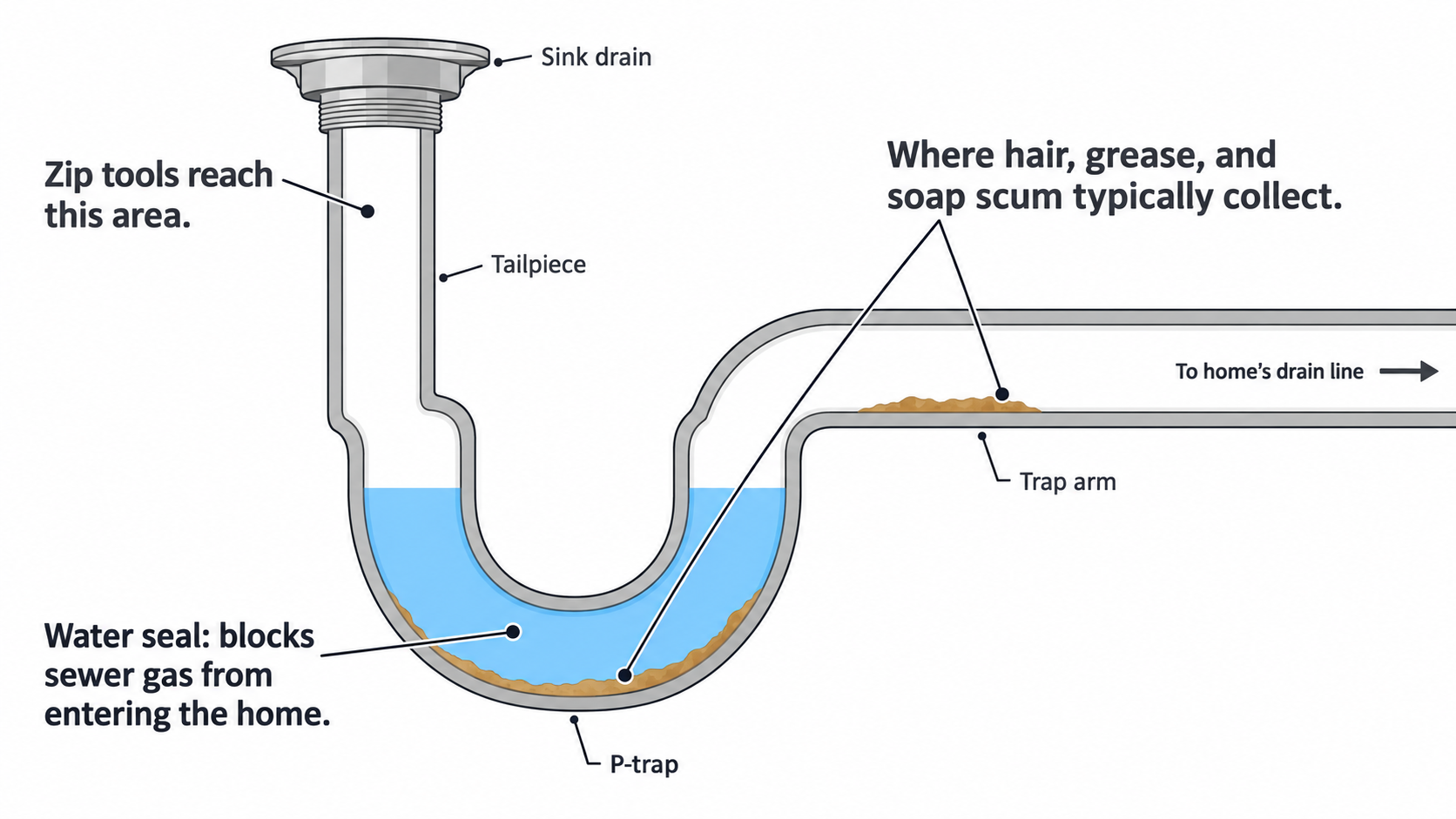
What collects there usually isn’t a single object. It’s layers of debris that build up gradually over time. Soap scum, grease, and hair mix with organic residue clinging to the pipe wall, and bacteria move in almost immediately, forming a thin, sticky biofilm layer. That layer traps the next bit of debris more easily than bare pipe would, so the opening narrows gradually, week over week, until one day it's narrow enough to actually stop water. A drain that worked fine for years doesn't fail all at once. It's been building the whole time.
Diagnosing the Clog by Fixture
Not every clog behaves the same way, because not every drain is built the same way. Here's what we typically find, fixture by fixture:
Kitchen sink. Grease is the primary culprit here. It goes down as a liquid and solidifies against the cooler pipe wall, where it catches food particles the way flypaper catches flies. The P-trap is almost always accessible from under the sink, and a confident DIYer can remove it by hand, bucket underneath first, to clear it directly rather than guessing from above.
Bathroom sink. Hair and soap scum dominate, and the actual blockage is very often not the pipe at all, it's the pop-up stopper assembly. Lifting the stopper out and clearing the hair wrapped around its base solves a surprising number of "clogged drain" calls without a tool ever touching the pipe.
Tub or shower. Same hair-and-soap combination as a bathroom sink, but the drain cover usually needs to come off first. A zip-it tool or a pair of needle-nose pliers pulls the hair mass out directly once you have access.
Toilet. This is the one fixture where a standard plunger genuinely isn't the right tool. A flange plunger, with the extra flap that extends into the bowl's outlet, seals far better than a flat cup plunger. If that doesn't clear it, a toilet auger, a crank-handled cable with a protective sleeve, is built specifically to avoid scratching porcelain the way a standard drain snake would.
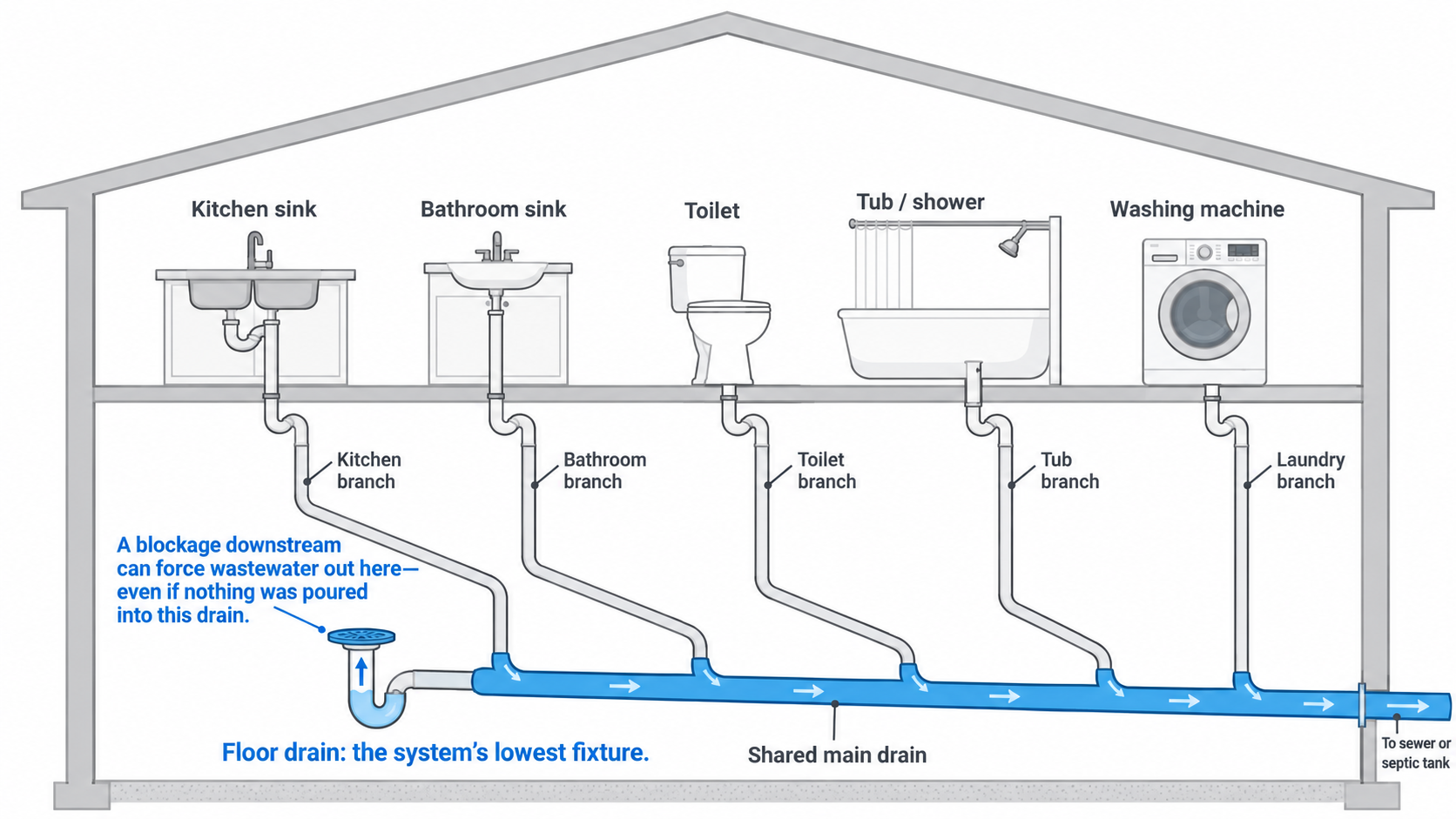
Floor drain. This sits at the lowest point in your plumbing system, which means it's often the first place water shows up when something else backs up elsewhere in the house, not necessarily the source of the problem itself.
Washing machine standpipe. Lint and detergent residue build up in the shared line the standpipe drains into. A mesh lint trap or "sock" fitted over the discharge hose is a cheap, genuinely effective way to prevent this before it starts.
DIY Methods That Actually Work
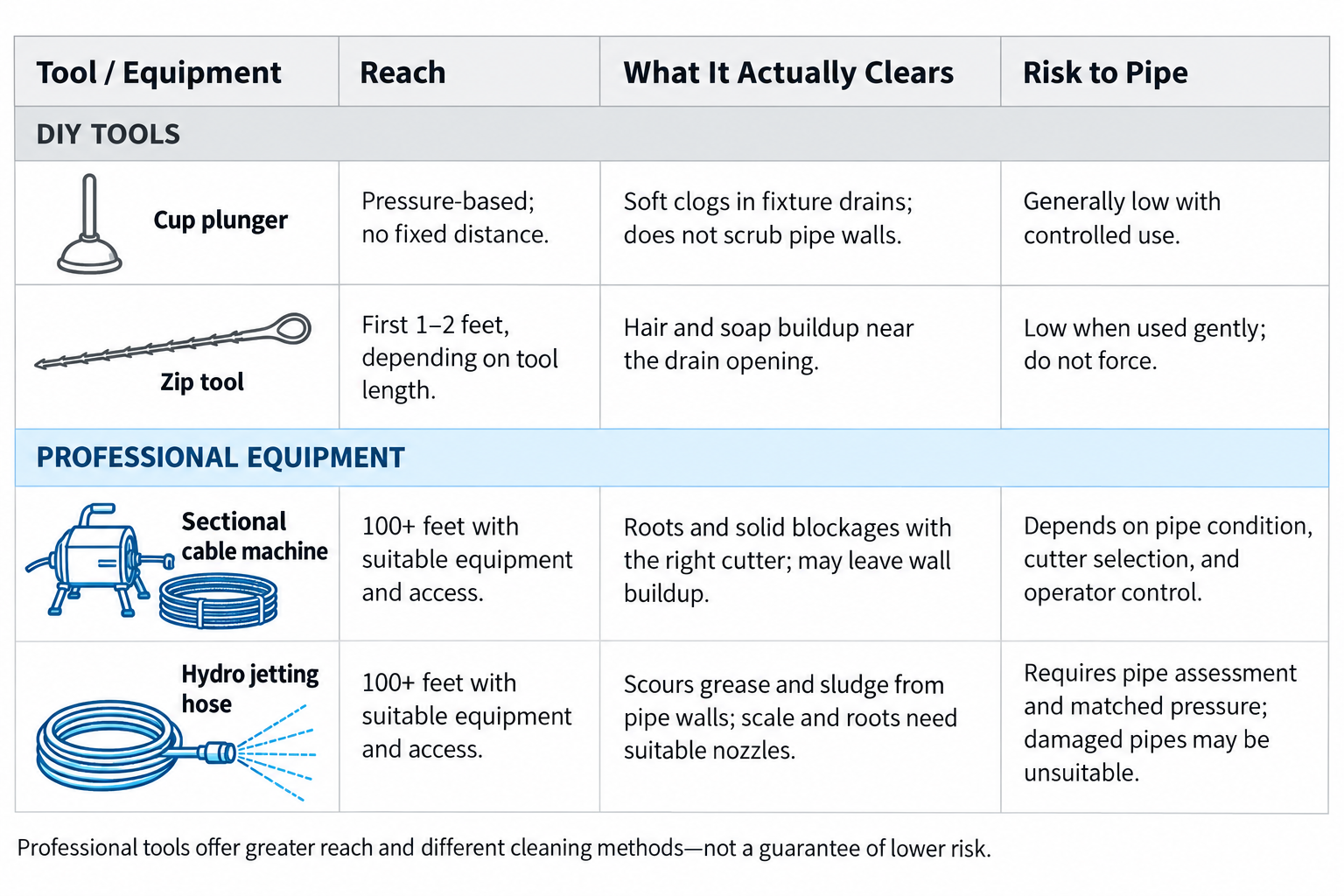
A cup plunger, used correctly, is still one of the most effective tools in your house for a sink or tub clog. The trick most people miss: you need enough water in the basin to fully submerge the plunger cup before you start, and the motion matters in both directions. Pushing down compresses air against the clog, and pulling up creates suction that helps pull it loose. Most people only do the push.
For hair clogs in a bathroom sink or tub, a plastic zip-it tool, a barbed strip of plastic sold for a few dollars at any hardware store, pulls hair and soap buildup straight out of the drain opening without taking anything apart. It's crude and it works, especially for a clog sitting in the first foot or two of pipe.
If a plunger and a zip tool both come up short, a basic hand-crank drum auger, sold at any hardware store, usually with a 25-foot cable, is a reasonable next step before calling a professional. It reaches further than either tool above and can break through a more established clog, though it shares the same limitation as professional snaking: it opens a path through the blockage, it doesn't clean the pipe wall around it.
If a fixture is slow rather than fully blocked, running hot (not boiling) tap water through a kitchen drain after washing dishes helps keep grease from re-solidifying on the pipe wall as it cools.
DIY Methods That Don't Work (or Make Things Worse)
Chemical drain cleaners are not all the same, and the differences matter. Most store-bought cleaners, including the original Drano formula, are caustic, built around sodium hydroxide, which generates heat as it reacts and breaks down hair and grease through a process called saponification, essentially turning fat into a soap-like substance. That reaction doesn't know the difference between the clog and the pipe it's sitting in. Used occasionally in a healthy PVC line, the risk is low. Used repeatedly, or in an older home running on cast iron or galvanized steel, that same caustic reaction is accelerating corrosion you can't see happening. And if the cleaner doesn't fully clear the line, the water left standing in the bowl or sink is now caustic too, which is a real hazard if you reach for a plunger next, since that water can splash back.
Enzymatic or bacterial drain treatments work differently, and more gently. They use live bacteria cultures and enzymes to slowly digest organic buildup over several days rather than breaking it apart chemically in one shot. They're not strong enough to clear an active, fully blocked drain, but they're a legitimate, low-risk maintenance product between service visits. Notably, they're the one chemical option that's actually safe for homes on a septic system, since caustic and acid-based cleaners can disrupt the bacterial balance a septic tank depends on. If your property runs on septic rather than city sewer, that's worth knowing before anything else goes down the drain.
Boiling water is advice that circulates constantly and causes more damage than people expect, specifically with PVC pipe, which makes up most residential plumbing installed in the last several decades. PVC can soften and warp at temperatures well below a full boil, especially at the joints. Hot tap water is fine. A kettle at a rolling boil is not.
Baking soda and vinegar is the internet's favorite drain "hack," and it's worth being straightforward about what it actually does: the fizzing reaction produces carbon dioxide, and most of that gas escapes back up through the drain opening rather than exerting any real pressure on the clog itself. It's a mild deodorizer at best. For an actual blockage, it is not doing the job people assume it's doing.
A wire coat hanger, unbent and pushed down a drain, can scratch the interior of a pipe wall or, worse, puncture an already-weakened section. At that point you haven't cleared a clog, you've created a leak, which is a different and more expensive repair entirely. If that's already happened, our leak detection and repair team can take it from here.
Signs It's Not a DIY Problem Anymore
A handful of signs reliably separate a quick fix from something that needs a closer look:
The clog comes back within days or weeks of clearing it
More than one fixture is draining slowly at the same time
A toilet gurgles when you run the washing machine or another sink
You smell sewage near a drain, not just see slow water
A floor drain backs up even though nothing was poured into it directly
A rented or purchased snake won't reach far enough to find the blockage
The gurgling toilet is worth explaining, because it's the sign people notice most and understand least. Your home's drain system relies on a vent stack that lets air into the pipes as water flows, preventing a vacuum from forming. When a main line is partially blocked, water forced down one fixture has to displace air that would normally escape through that vent, and instead it pushes back up through the nearest low-resistance path, usually another fixture's trap. That's the gurgle. It's air finding somewhere to go because its usual route is blocked, and it almost always means the problem is in the shared sewer line, not an isolated fixture.
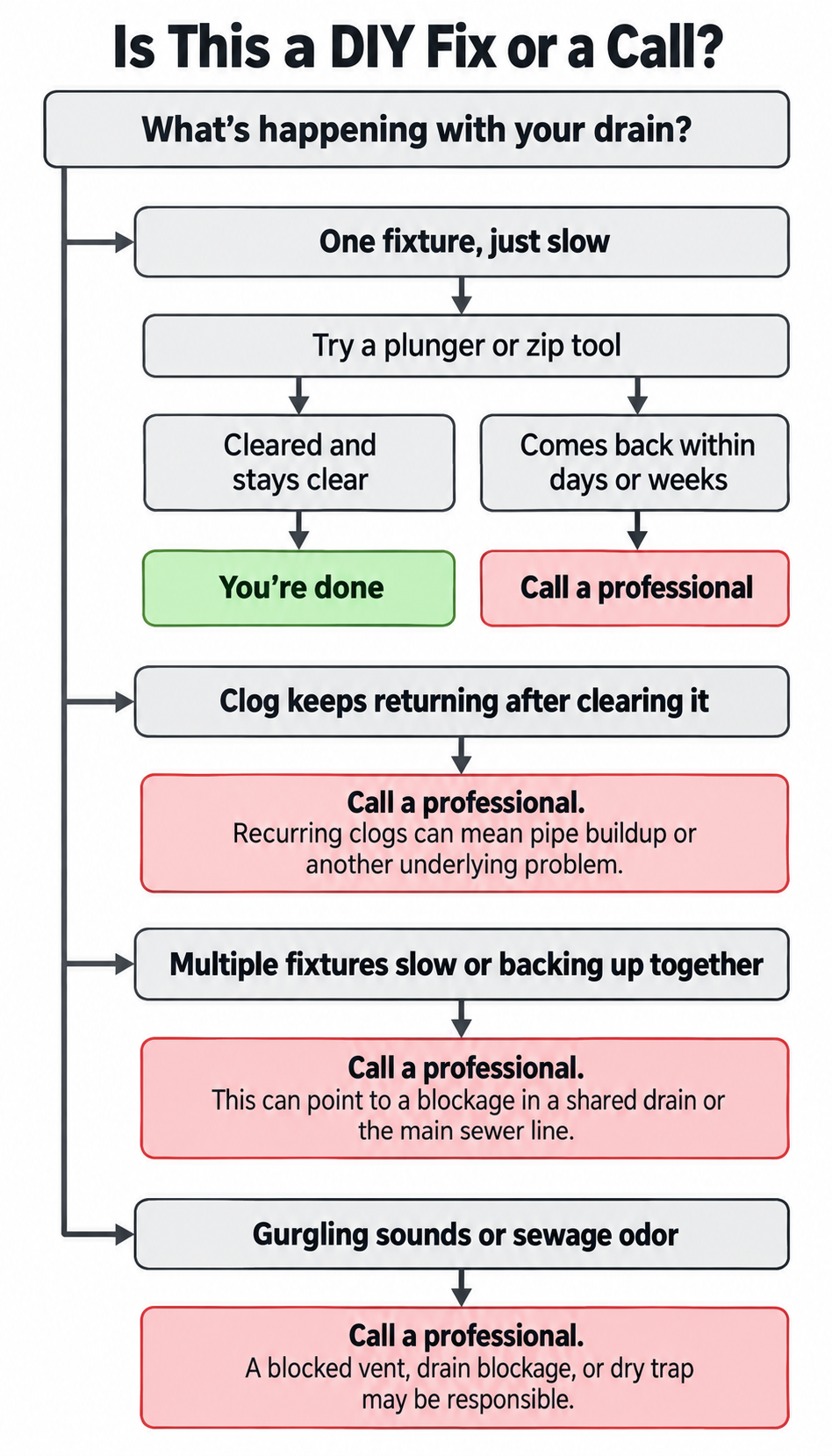
Any of these points to something past the trap: buildup along a longer stretch of pipe, a line that's lost its slope, or root intrusion, which is a genuinely common cause of recurring clogs across East Texas given how much of our sewer line infrastructure sits in clay soil.
What a Professional Visit Actually Fixes That DIY Can't
A camera inspection shows exactly what’s happening inside the line instead of guessing from symptoms at the fixture. From there, a straightforward isolated clog usually still just needs mechanical snaking to clear it. But a line with grease buildup along its full length, mineral scale, or root intrusion needs hydro jetting, which scours the entire interior of the pipe rather than punching a narrow channel through it. We cover the difference between the two in more detail in our hydro jetting versus snaking breakdown, if you’re trying to figure out which one your situation actually needs.
The camera inspection is really the key step here. It’s the only way to know which of the two you’re actually dealing with before any work starts, rather than guessing and paying for the wrong fix.
Keeping the Next Clog From Starting
Every fix mentioned only matters until the next clog starts building, so a little routine maintenance saves you from repeating all of it. None of this takes much effort or money, it’s mostly about catching the obvious culprits before they become a problem:
Install a mesh screen over kitchen and bathroom drains to catch hair and food debris before it enters the pipe
Never pour grease or cooking oil down a kitchen drain, even with hot water chasing it
Fit a lint trap or sock over your washing machine's discharge hose
Flush only toilet paper, not wipes marketed as flushable, which largely don't break down the way toilet paper does
Schedule a professional drain cleaning annually if your home has mature trees near the sewer line or heavy kitchen grease use
Frequently Asked Questions
Why won’t a plunger fully unclog my drain?
A plunger can unclog the opening itself but doesn’t remove the buildup lining the rest of the pipe. If grease, soap scum, or root material is coating the walls further down, the same spot clogs again within days or weeks because the actual cause was never addressed.
Is it safe to use Drano or similar chemical cleaners regularly?
Occasional use in a healthy PVC line carries low risk. Repeated use, or any use in an older home with cast iron or galvanized pipe, increases the chance of corrosion damage over time. If you're reaching for it every month, that's a sign to get the line professionally inspected instead.
Are enzymatic drain cleaners actually effective?
For ongoing maintenance, yes, within limits. They digest organic buildup gradually over days rather than clearing an active blockage immediately, and they're notably the safest chemical option for homes on a septic system. They're not a fix for a drain that's already fully clogged.
How do I know if the problem is in my drain or my sewer line?
A clog affecting a single fixture is usually a drain-level problem. If multiple fixtures back up together, or a toilet gurgles when another drain runs, the issue is more likely in the main sewer line.
Can a DIY attempt actually damage my pipes?
Yes. Repeated chemical cleaner use can corrode older pipe materials, boiling water can soften PVC joints, and a wire hanger or improperly used snake can puncture an already-weakened section of pipe, turning a clog into a leak.
When should I stop trying to fix it myself and call a plumber?
If a clog returns within a few weeks of clearing it, if it affects more than one fixture, or if you smell sewage rather than just seeing slow water, it's time for a camera inspection rather than another round of DIY.
Dealing with a clog that won't stay cleared? Call (903) 496-5947 for drain cleaning in Longview, Tyler, or elsewhere in East Texas backed by Straight Forward Pricing™ and our Fix It or It's Free guarantee.


